
ANZAC Mythology and the Rhythms of National Memory

Brett Allen • April 25, 2025

In Australia, a performance ritual that feels timeless and meticulously rehearsed is conducted each April. The solemnity of the ANZAC Day dawn service call back to a military campaign over a hundred years ago. Today, it resonates through a contemporary landscape of social media hashtags, sporting events, and civic performances. It is a national memory in motion—recurring, refracted, and reassembled.

In this essay, I explore ANZAC not as a fixed historical truth but as a mythology in loop—a narrative system that generates authenticity through repetition, performance, and recognition. Drawing from anthropological theories of authenticity, digital cadence, and social memory, I argue that ANZAC operates as a dynamic cultural mechanism that affirms national identity while selectively structuring whose memories matter.

This essay is not a critique of ANZAC as false or fabricated; it is a brief investigation into how authenticity is constructed and maintained in a mythology that must continuously adapt to remain resonant. It is a myth that performs national unity through a shared past, even as it is mobilised to legitimise contemporary politics, identity claims, and institutional values.

As a mythology, ANZAC functions through temporal, emotional, and symbolic loops. These loops allow layering personal family memory, institutional ritual, and mediated spectacle. However, they also raise important anthropological questions: What makes a national narrative feel authentic? Whose stories are repeated and elevated, and whose are silenced or obscured? How do digital spaces alter the rhythms and reach of remembrance? What follows is not a linear history of ANZAC but an exploration of its cultural cadence: how the myth travels through time, space, and media, looping back each year to reaffirm a sense of who we are—and to quietly shape who we are allowed to be.

The Performative Nature of National Authenticity

Authenticity is often assumed to be intrinsic—something that can be possessed or lost. However, as scholar Richard Handler argues, authenticity is not a quality of the object or subject itself but rather a social judgement, an act of recognition grounded in cultural expectations (Handler 1986). In the context of national mythologies like ANZAC, authenticity is not simply discovered in the past; it is performed in the present.

The ANZAC tradition, anchored in the Gallipoli campaign of 1915, has long been heralded as the birth of the Australian national character: mateship, courage under fire, irreverent humour, and egalitarian sacrifice. These traits are routinely presented as “authentic” expressions of the Australian spirit. However, the continued relevance of this narrative lies not in its historical exactness but in its ritualised repetition—in the ways it is embodied, enacted, and emotionally affirmed each year through commemorative practice.

From school assemblies to dawn services and televised documentaries to Anzac-themed AFL matches, the mythology is performed across a wide social field. These performances do more than remember the dead; they reaffirm a national self-image. In doing so, they create what Charles Taylor calls a “social imaginary”—a shared sense of belonging constantly reinforced by narrative, practice, and affect (Taylor 2004).

However, these performances are never neutral. Like all rituals, they are structured by power. What gets included as “authentically” ANZAC—and, by extension, “authentically” Australian—is often shaped by dominant cultural scripts. For decades, this meant a focus on white male soldiers from Anglo-Celtic backgrounds. More recently, the commemorative discourse has expanded to include Indigenous soldiers, nurses, and migrant communities, but these inclusions still operate within the constraints of what is culturally legible as ANZAC.

Thus, national authenticity is not a mirror—it is a stage. Moreover, not all bodies and histories are equally visible at this stage.

Digital Cadence and the Re-Mediation of ANZAC

In recent decades, ANZAC mythology has expanded and transformed—most notably through its migration into digital space. As Australia’s commemorative practices adapt to a digital society, the rhythms of remembrance shift. Memory no longer belongs solely to formal institutions; it is shaped and circulated by individuals, families, influencers, and algorithms. Here, the concept of digital cadence—the temporal flow and pacing of cultural content online—becomes a useful anthropological tool.

Each year, the ANZAC myth is reactivated on social media platforms, creating synchronised pulses of national reflection. These pulses are not spontaneous but patterned, curated, and accelerated by digital infrastructures. Users post family photos of war veterans, share stylised images of poppies and flags, or quote the “Ode of Remembrance” with hashtags like #LestWeForget or #ANZACDay. In doing so, they participate in what anthropologist Daniel Miller describes as the domestication of the digital: integrating national identity performance into the texture of everyday online life (Miller et al. 2016).

However, the digital also fragments the loop. The solemnity of commemoration can sit awkwardly alongside advertising for Anzac Day sales, memes, or performative virtue-signaling. This blurring of commercial, sacred, and personal registers opens space for plural expression and cultural tension. The digital environment thus complicates the question of what constitutes an “authentic” ANZAC memory. Is it a heartfelt Facebook post about a grandfather’s service? A TikTok reenactment of Gallipoli? An Instagram tribute with a branded watermark?

Moreover, digital platforms invite counter-narratives into the loop. Stories of Aboriginal and Torres Strait Islander soldiers—long excluded from official histories—now find visibility through grassroots digital activism. These interventions not only enrich the mythology but challenge its selective silences. They demand space within the loop, insisting that remembrance must be national and just.

Still, inclusion is not always empowerment. Representation within the ANZAC myth can risk absorbing difference into sameness—flattening cultural specificity into a universalised ideal of sacrifice. As the loop expands, the challenge becomes recognising multiplicity without collapsing it into a single narrative of belonging.

Inclusion, Exclusion, and the Politics of Memory

National myths are powerful not only because of what they remember but also because of what they allow us to forget. The ANZAC mythology, as both a cultural loop and a mnemonic performance, operates through selective remembrance. It draws a bright spotlight on particular forms of sacrifice and service while others remain in shadow. In this way, mythology is not just a story of the past—it is a mechanism of social sorting.

In recent years, efforts to broaden ANZAC commemorations have led to the inclusion of once-marginalised participants: Indigenous soldiers, women, nurses, migrants, and even civilian war workers. These moves are often framed as corrections to a historically narrow vision of national service. However, they also reveal the conditions under which inclusion becomes possible. To be remembered within the ANZAC narrative, one must conform—implicitly or explicitly—to its symbolic values: bravery, duty, and loyalty to the nation.

Ghassan Hage (1998) describes nationalism as a form of governmentality—a structure of belonging that defines not just who is “in,” but who gets to imagine themselves as legitimately Australian. Within the ANZAC loop, this logic plays out subtly. For example:

  • An Australian First Nations soldier may be celebrated for their military service but not for their political resistance to colonisation.
  • A nurse’s wartime labour may be honoured while her postwar domestic struggles are suppressed.
  • A migrant’s service in Vietnam might be recognised, but their family’s refugee story remains culturally illegible.

In this way, inclusion can function as aesthetic pluralism—a recognition of difference that still conforms to dominant frames of worth. What looks like diversity may mask deeper structural exclusions.

This raises important anthropological questions about the politics of memory:

  • Whose grief is grievable in the national imaginary?
  • Who is allowed to be heroic—and on what terms?
  • What kinds of lives are deemed worthy of commemoration, and what kinds of deaths are silenced?

These are not abstract concerns. They shape public funding, education curricula, museum exhibitions, and the moral vocabularies of national identity. In an era where Australia is grappling with its colonial past and multicultural present, the mythology of ANZAC risks stabilising a version of history that is legible but incomplete.

Digital Heritage and the Inclusion of Silenced Voices

The digital preservation of ANZAC heritage has recently allowed some previously marginalised voices to be heard and recognised beyond official historical narratives. These initiatives do not simply diversify the commemorative field; they challenge the cultural legibility of the ANZAC myth and expand its mnemonic loop.

For First Nations veterans, digital oral history projects such as Serving Our Country have profoundly contributed to national memory. By travelling across communities to record the experiences of Aboriginal and Torres Strait Islander servicemen and women, these projects have enabled a reframing of war memory that centres Indigenous voices (Beaumont and Cadzow 2018). These interviews—archived and curated in digital repositories—are acts of preservation and justice.

Institutions like the Australian War Memorial have also contributed to this shift. Through its digitised collections and the For Our Country memorial, the AWM now hosts searchable archives of Indigenous service histories, often enhanced by photographs, letters, and community-submitted biographies (Australian War Memorial 2015).

Similar efforts have brought visibility to Chinese-Australian diggers, whose loyalty and sacrifice have long been occluded by the whiteness of ANZAC iconography. The Chinese ANZACs initiative by the Department of Veterans Affairs uses short online documentaries and interactive storytelling to recover their histories (Clyne and Smith 2015).

The same digital curation has allowed for a deeper representation of women’s wartime labour. Projects such as the Australian Women in War digital series and Women in the Second World War: In Their Own Words allow nurses, munitions workers, and servicewomen to speak in their own voices—through digitised letters, diaries, and recorded interviews (Department of Veterans Affairs, 2019; 2020).

Spaces like the Shrine of Remembrance in Melbourne, where interactive screens now feature recorded veteran testimonies—including women and Indigenous Australians—exemplify this shift in practice (Saliba, Young and Ayres, 2021). Anthropologically, these changes represent a movement toward plural memory-making—a form of national myth that affirms difference as central to identity, not marginal to it (Waterton, Sumartojo and Drozdzewski, 2021).

Toward a Plural Heritage Future

If ANZAC mythology is a loop—repeating, adapting, and reaffirming a national story—it must now reckon with its contours, not to erase its power but to widen the circle of remembrance. The challenge is not whether ANZAC is still relevant but to whom, how, and at what cost.

In this context, authenticity is not about preserving a myth in amber. It is about asking: What makes this story feel true? Moreover, what truths are left untold to make it so? As Australia grapples with its colonial foundations, shifting demography, and contested histories, the task ahead is not simply to diversify the faces in the story—but to transform the grammar of the myth itself.

This means recognising ANZAC not as a closed canon but as a dynamic cultural framework—a living inheritance that must be constantly re-evaluated through ethical, historical, and anthropological scrutiny. In practical terms, it may mean:

  • Institutional support for underrepresented voices and stories—not as appendices to the national narrative but as integral to it.
  • Community-led commemorations that challenge top-down structures of heritage and allow memory to be local, intimate, and dissenting.
  • Digital platforms that do more than aestheticise remembrance, instead becoming tools for participatory historiography and contested memory work.
  • Educational reforms that treat ANZAC as a gateway to complexity—not just pride, but also trauma, absence, and multiplicity.

Such shifts demand a willingness to move beyond performative pluralism toward a reflexive heritage practice that does not just ask who is being remembered but who is doing the remembering and why.

To embrace a plural heritage future is not to reject the ANZAC myth but to ask it to do more. To carry the weight of national pride and the burdens of silence. To reflect not just a single legacy but a constellation of intersecting histories—some tragic, some heroic, some yet to be fully known.

In the loop of national memory, authenticity does not mean sameness. It means honesty. Perhaps the most authentic gesture we can make now is to ask better questions—of ourselves, our past, and the stories we choose to tell in its name.

Final Thought

In 1914, Australia had a population of just below five million people. Today, it exceeds twenty-seven million. The situation involves more than just population growth; it represents a fundamental change in the nation’s social structure and cultural and political makeup. The ANZAC mythology created during a different era in Australia continues in today’s society and features deep diversity and historical reflection. The memory loops must broaden as our population grows and becomes more diverse to accommodate additional voices and truths. ANZAC mythology can stay relevant only if it represents today’s Australia that remembers its history rather than merely the past version of the country.

References

Australian War Memorial (AWM), 2015. Researching Indigenous Service. [online] Canberra: AWM. Available at: https://www.awm.gov.au/articles/encyclopedia/indigenous [Accessed 25 Apr. 2025].

Beaumont, J. and Cadzow, A., 2018. Serving Our Country: Indigenous Australians, War, Defence and Citizenship. Sydney: NewSouth Publishing.

Clyne, J. and Smith, R., 2015. Chinese Anzacs. Canberra: Department of Veterans’ Affairs.

Department of Veterans’ Affairs (DVA), 2019. Australian Women in War: Investigating the Experiences and Changing Roles of Australian Women in War and Peace Operations 1899–Today. Canberra: Australian Government.

Department of Veterans’ Affairs (DVA), 2020. Women in the Second World War: In Their Own Words. [online] Canberra: Australian Government. Available at: https://anzacportal.dva.gov.au/resources/women-second-world-war-their-own-words [Accessed 25 Apr. 2025].

Drozdzewski, D., 2016. Does ANZAC sit comfortably within Australia’s multiculturalism? Australian Geographer , 47(1), pp.3–10. https://doi.org/10.1080/00049182.2015.1108700

Drozdzewski, D. and Waterton, E., 2016. In remembering ANZAC Day, what do we forget? The Conversation , [online] 20 Apr. Available at: https://theconversation.com/in-remembering-anzac-day-what-do-we-forget-58132 [Accessed 25 Apr. 2025].

Handler, R., 1986. Authenticity. Anthropology Today , 2(1), pp.2–4.

Hage, G., 1998. White Nation: Fantasies of White Supremacy in a Multicultural Society. Sydney: Pluto Press.

Miller, D., Sinanan, J., et al., 2016. How the World Changed Social Media. London: UCL Press.

Saliba, S., Young, W. and Ayres, M., 2021. Teaching memory: digital interpretation at the Shrine of Remembrance, Melbourne. Architectural Theory Review , 25(1), pp.56–75. https://doi.org/10.1080/13264826.2021.1913437

Taylor, C., 2004. Modern Social Imaginaries. Durham: Duke University Press.

Waterton, E., Sumartojo, S. and Drozdzewski, D., 2021. Encounters with ANZAC in a digital world: tropes and symbols, spectacle and staging. In: D. Drozdzewski, S. Waterton and E. Sumartojo, eds. Geographies of Commemoration in a Digital World: ANZAC @ 100. Singapore: Palgrave Macmillan, pp.55–79.

By Brett Allen March 28, 2026
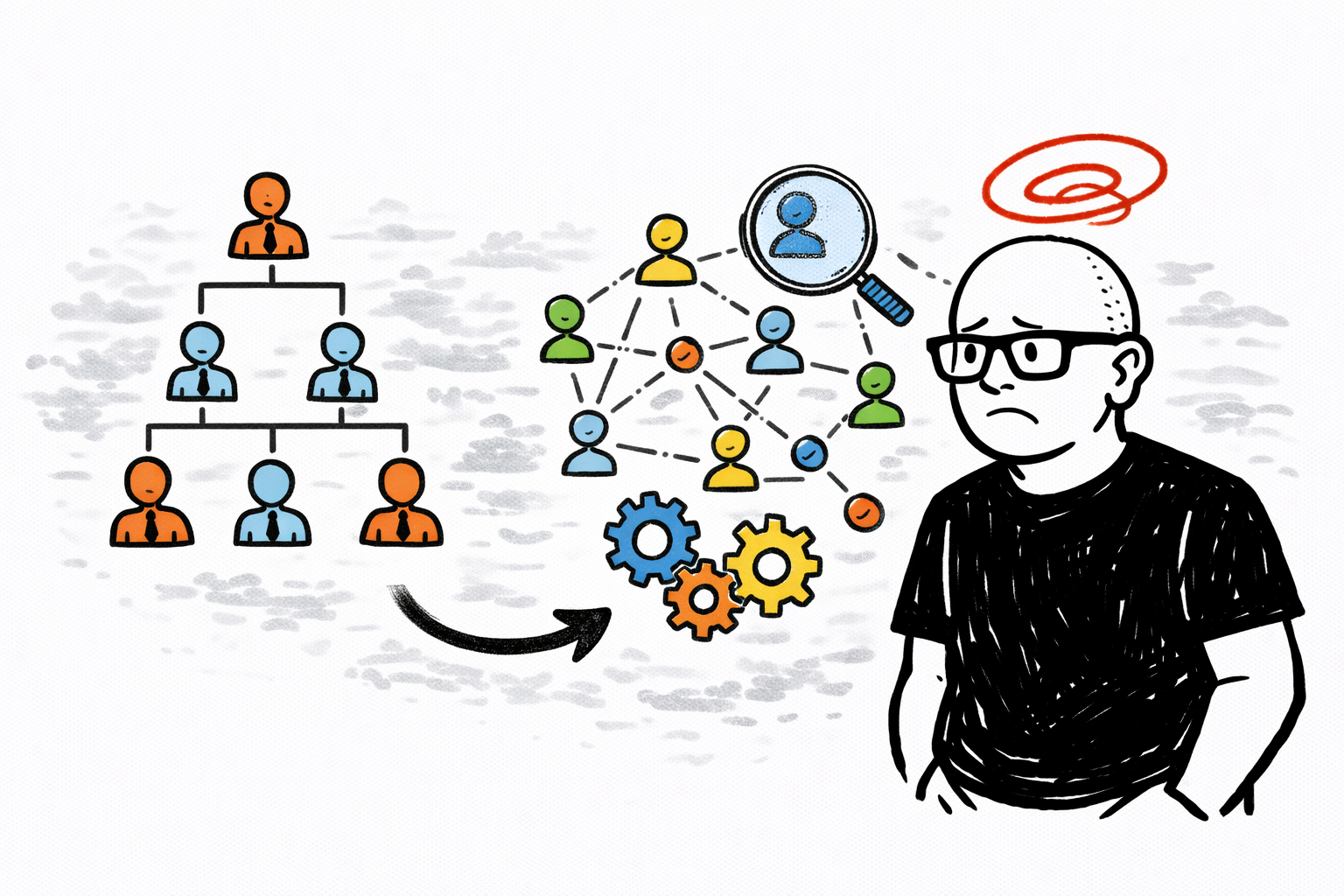
Learning to See Organisations Differently
By Brett Allen March 25, 2026
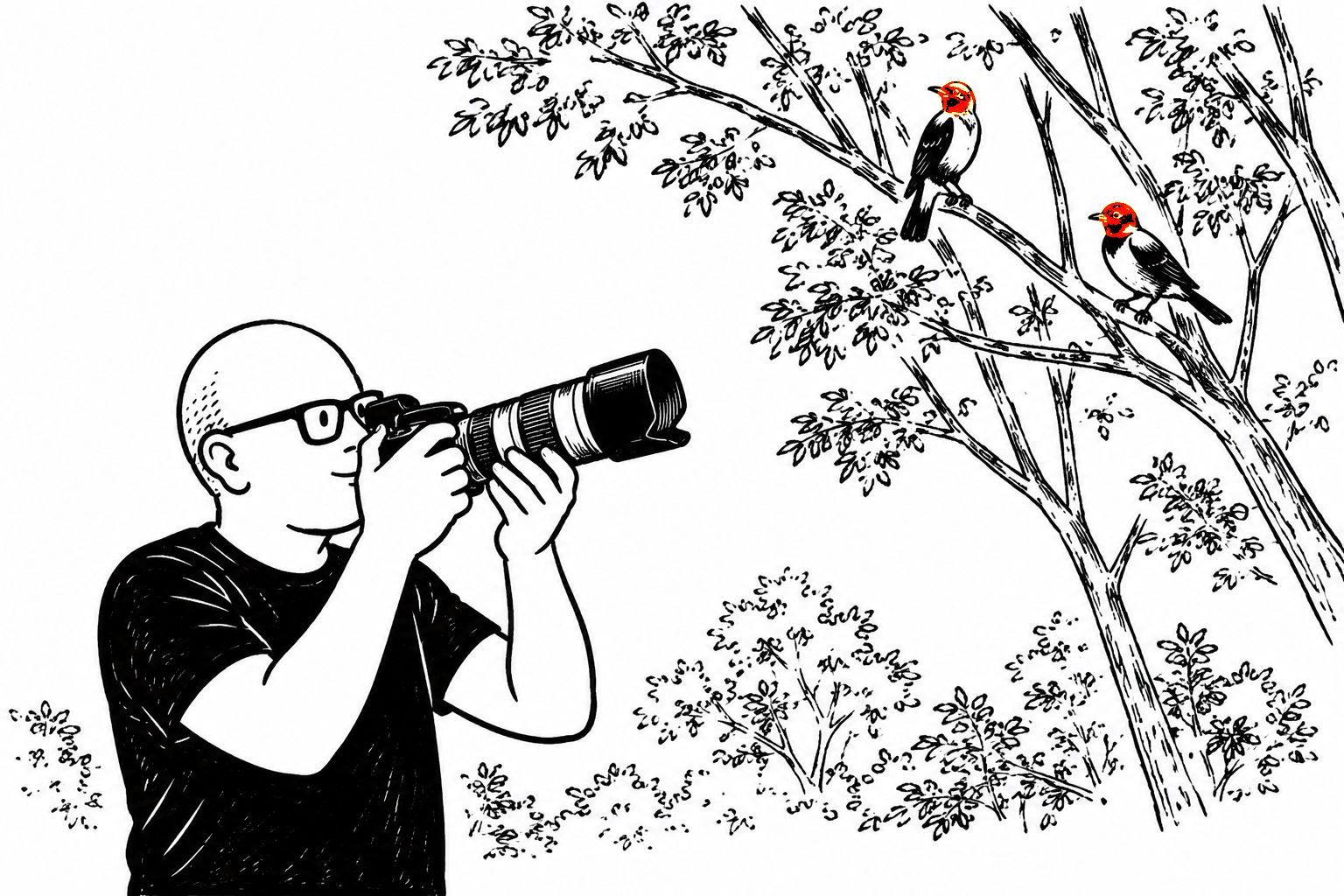
I cannot remember the name of the small eucalyptus purchased on sale from Bunnings. That seems important now, though it mattered less when I planted it. At the time, it was a small tree placed in the far corner of the garden with a fairly simple intention. I wanted to feed the New Holland honeyeaters that regularly moved through the yard. They were already part of the garden’s rhythm, arriving in quick bursts, calling sharply, disappearing again into the shrubs and fences and neighbouring trees. Planting the eucalyptus felt like a small act of welcome. A gesture of provision. Ten years later, the tree is about five metres tall and covered in small pink flowers. It has become something other than what I imagined. The New Holland honeyeaters do visit it. In that sense, the plan worked. But the tree was never only theirs. Wattlebirds arrive with their rougher, more assertive presence. Other honeyeaters come through too, drawn by nectar and movement. Superb fairy-wrens dart in and out of the lower branches, not for the flowers exactly, but for the insects that the flowers attract. In the evening, a ringtail possum and its joeys visit the tree, moving through it with a different tempo altogether. Occasionally, a grey-headed flying fox arrives from the new local colony, an animal not always welcomed by nearby fruit growers, but here, in this garden, it appears as part of the same wider set of relations. It is welcome here. The tree has become a meeting point. Not a symbolic one only, but a practical one. A place where nectar, insects, shelter, shade, habit, hunger and timing gather together. What began as a planted object has become a small ecological field. Its meaning is not held in the tree alone, but in the relations that form around it. The tree is not simply “in” the garden. It is helping make the garden into a different kind of place. The tree has also changed how the garden sounds. In the afternoons, corellas, galahs and cockatoos pass overhead, sometimes unseen at first, announced by their calls before their bodies appear above the roofline. Their sound belongs to the wider suburb rather than only to the backyard. It comes from above, across fences, roads, powerlines and the remnant trees that still hold the memory of a much larger habitat. Their calls are not background noise. They are a reminder that the garden sits inside a larger aerial world, one that birds read and use in ways I can only partly understand. Closer in, the rainbow lorikeets arrive with less subtlety. They are bossy, bright and possessive, turning the flowering tree into a noisy argument over nectar. They do not simply feed. They claim, chase, scold and return. Their colour almost feels too vivid for the garden's muted greens and greys, yet they belong completely to it. The eastern and crimson rosellas are different. They feel more delicate, more occasional. I mostly see them when the tree is in flower, as if the pink blossoms briefly open a door through which they re-enter the backyard. The hammock sits close to the lemon tree, so the garden is not only eucalyptus blossom and bird movement. There is citrus in the air too, especially when the leaves are brushed or the weather is warm. The smell is sharp, clean and slightly oily, mixing with the softer scent of flowering gum, damp soil, dry mulch and the faint sweetness of nectar. After rain, the garden smells heavier. The eucalyptus leaves release that familiar resinous scent, while the lemon tree cuts through it with something brighter. It is a smell of domestic care and wild visitation at once. From the hammock, the backyard is never silent. There is the high chatter of honeyeaters, the scratch and shuffle of small birds in the foliage, the sudden wingbeat of lorikeets arriving too fast, the rasp of wattlebirds, the thin contact calls of fairy-wrens, and the overhead clamour of parrots moving through the afternoon. The ding-ding of a crimson rosella in another nearby tree. My attempts to mimic the sound are met with a harsh chatter. In the evening, the sound changes again. The birds withdraw. Possums begin their quieter work in the branches. Leaves move without wind. The garden becomes less visual and more textural. I wander to the corner with my torch to say hello to the possumn and to curse it eating my roses as well, but it is welcome in this tree. This is where the anthropological view becomes useful. It asks me not to see the backyard as a private domestic space occupied by a few visiting animals, but as a shared and negotiated environment. The animals are not decorations added to human life. They are participants in the making of place. They arrive with their own needs, patterns and risks. They move through fences, property lines and human intentions without much concern for the categories we place around them. The backyard, then, is not only a garden. It is a habitat, corridor, feeding site, refuge, territory and threshold. Sitting in the hammock beneath the flowering eucalyptus, close to the lemon leaves, close to the birdbath, I become aware that care is often less grand than we imagine. It is not always rescue, intervention or expertise. Sometimes it is water in the birdbath, filled daily. Sometimes it is planting for a flower that will open in another season. Sometimes it is learning to sit still long enough to notice who comes, when they come, and what they do once they arrive. The first tree was planted for a single species, but it has taught me to think beyond that single-species intention. The New Holland honeyeaters were the beginning of the relationship, not its limit. The tree has drawn me into a wider multispecies awareness, where care becomes less about choosing one animal to help and more about creating conditions in which many forms of life can pass through, feed, shelter, rest and return. There is also a lesson in time. Ten years is a long time in the life of a garden, but not such a long time in the life of a tree. The eucalyptus has grown slowly into significance. Its current flowering is not just a seasonal event, but the result of a decade of waiting, weather, soil, roots and repeated visits. The garden remembers through growth. Relationships take shape through recurrence. The birds know the tree now. The possums know it. The insects know it. The flying foxes may know it only occasionally, but even that occasional visit matters. I sit beneath it and think about what it means to share an urban space with animals whose lives are often made difficult by the very environments we have built. A backyard cannot undo habitat loss. A flowering tree cannot resolve the conflicts between flying foxes and fruit growers, or between urban expansion and the animals displaced by it. But it can still matter. It can become part of a patchwork of small refuges, minor corridors and everyday acts of repair. The garden is not peaceful in the simple sense. It is busy, contested, scented, noisy and alive. The lorikeets argue. The honeyeaters negotiate access. The fairy-wrens hunt through the insects. The rosellas appear and disappear with the flowering. The possums come at dusk. The flying fox arrives from a colony that some people would rather not have nearby. The lemon tree perfumes the air beside me while the eucalyptus feeds animals above me. So I have planted another flowering eucalyptus. This one will flower at a different time of year. That feels like a small adjustment in the rhythm of care. Not just more planting, but more attention to timing. More attention to the gaps between seasons. More attention to who might be hungry when one tree has finished, and another has not yet begun. Perhaps that is what the first tree has taught me. Caring for backyard animals is not about imagining myself as the centre of their world. It is to become more attentive to the world's already unfolding around me. It is to plant, watch, refill, wait and learn. The far corner of the garden is no longer far away. It has become one of the places where relationships happen.
By Brett Allen March 19, 2026
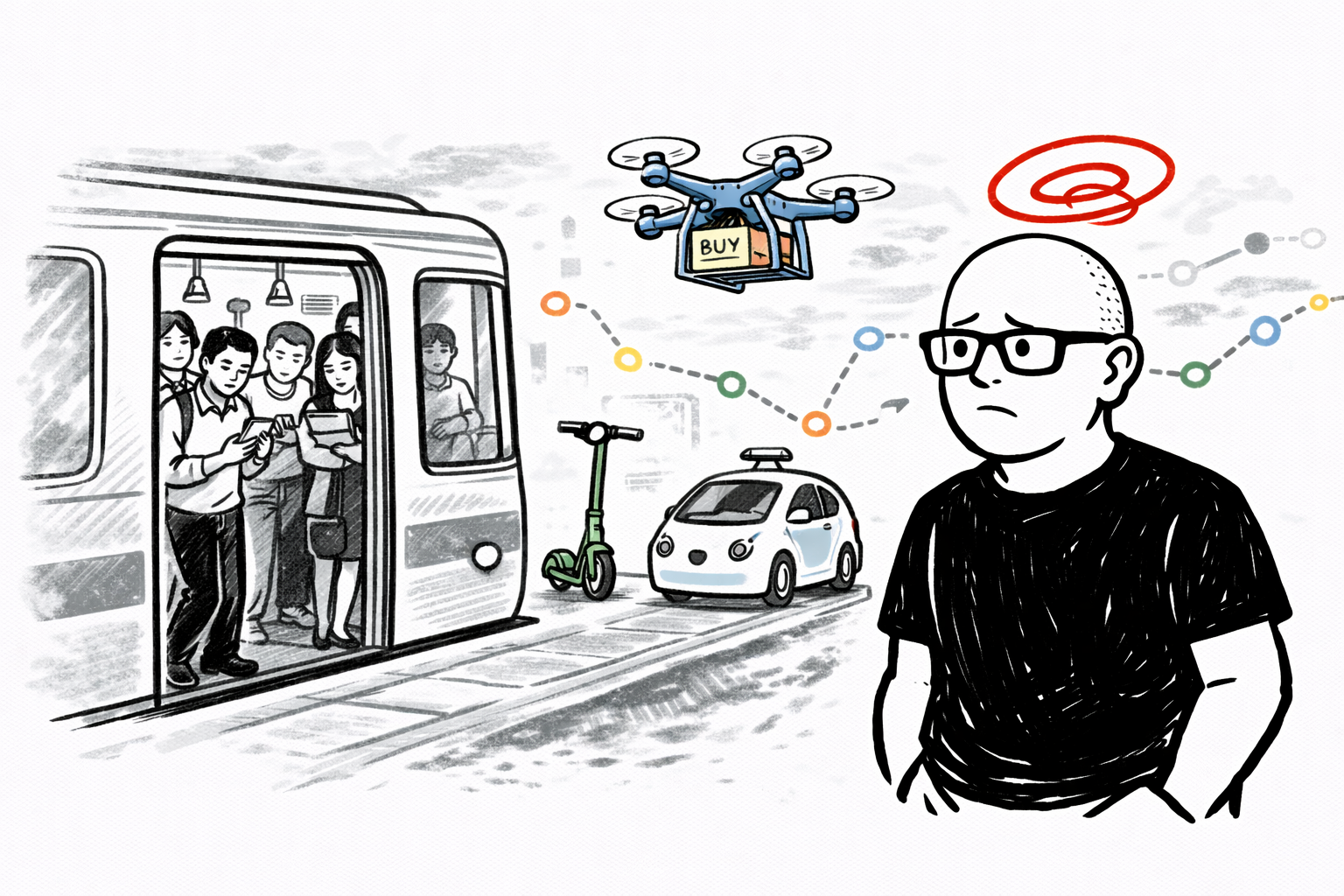
A few years ago, I would never have imagined becoming an ethnographer of the train. But geopolitics has a way of rearranging the mundane. As fuel prices surge, a consequence of unnecessary war in the Middle East and trade wars, all decided in distant corridors of power. The ripple effect has forced me to switch from my car to public transport. From driving the lines, tracing my own routes through the road network insulated in steel and glass, I was thrown in with everyone else.  What I found has become curious. A train line is not simply a route through space. It is a line, physical and imagined, entangled with a multitude of lives, intentions, and temporalities. Knotting together and unravelling at each station along the journey. A student boards at one stop, a shift worker departs at the next, and a consultant opens a laptop three stations later. The line gathers and disperses, gathers and disperses. Each node of the collection station, platform, and carriage doors rounds up and orders human packages. People gather, but they do not meet. They are collected. Sorted. Loaded. Pack away. Arriving at the station or stop, bodies pour out in a slow, uniform current, phones in hand, heads bowed. I couldn’t shake the image of workers leaving the machine in Fritz Lang’s Metropolis . The same shuffling gait. The same downcast eyes. But these aren’t labourers broken by industrial discipline. These are knowledge workers, voluntarily tethered. I began to think of the smartphones as umbilical cords. Unnecessary ones at that. These digital entanglements connect each person to hegemonic entities they can barely name or conceive. Big tech, algorithmic processes, AI, data architectures, concepts that don’t enter the mind of the commuter. So who is nourishing whom in this arrangement? The user feels connected, sustained. The platform extracts attention, data, and behavioural surplus. Both parties believe the other is the dependent. And then there were the laptops. People are already working buried in emails, spreadsheets, Slack messages — before they’d arrived at the office. Whatever happened to the Australian ethos of working to live rather than living to work? That sensibility assumed a clean boundary between labour and leisure, between the office and the beach. The smartphone has erased or weakened that line. Work, rest, and distraction occupy the same device, posture, and glazed expressions. You cannot tell from looking whether someone is answering their manager or scrolling memes. The activity is identical. I noticed all of this because I was reading Tim Ingold’s Life of Lines , a physical book, held in two hands, which, of course, is its own technology of insulation. Ingold distinguishes between the wayfarer, who moves attentively through the world, and the transported person, who is essentially a parcel moved from one destination to another. My fellow commuters had gone further. They were being transported through physical space while simultaneously being transported through digital space. Present in neither. Autonomous in neither. The train line, this thing that entangles us all at different points of time and space, had become merely a conduit, its knots of human meeting pulled tight and never opened. The car windscreen has been replaced by the phone screen. The private cabin has been replaced by the digital bubble. The insulation persists. It just changed the substrate. I looked up from my book and saw lines everywhere. The fixed line of the rail corridor. The invisible lines of the wireless signal. The lines of text on every screen. The lines of force run from Washington to fuel pumps to household budgets to train tickets. And the line I was travelling, entangled with a multitude at different points of time and space, knotting and unknotting at every station. We were all following lines. None of us chose quite where they led. Perhaps the most honest thing I can say is this: I am one of the drones, too. I was reading a book about lines while being carried along one, performing a more prestigious version of exactly what everyone else was doing, absent from the shared space, following a thread of my own. The only difference was the moment I looked up. Maybe that’s enough. The ethnographic instinct isn’t immune to the pattern. It’s the willingness to notice you’re in it.
More Posts