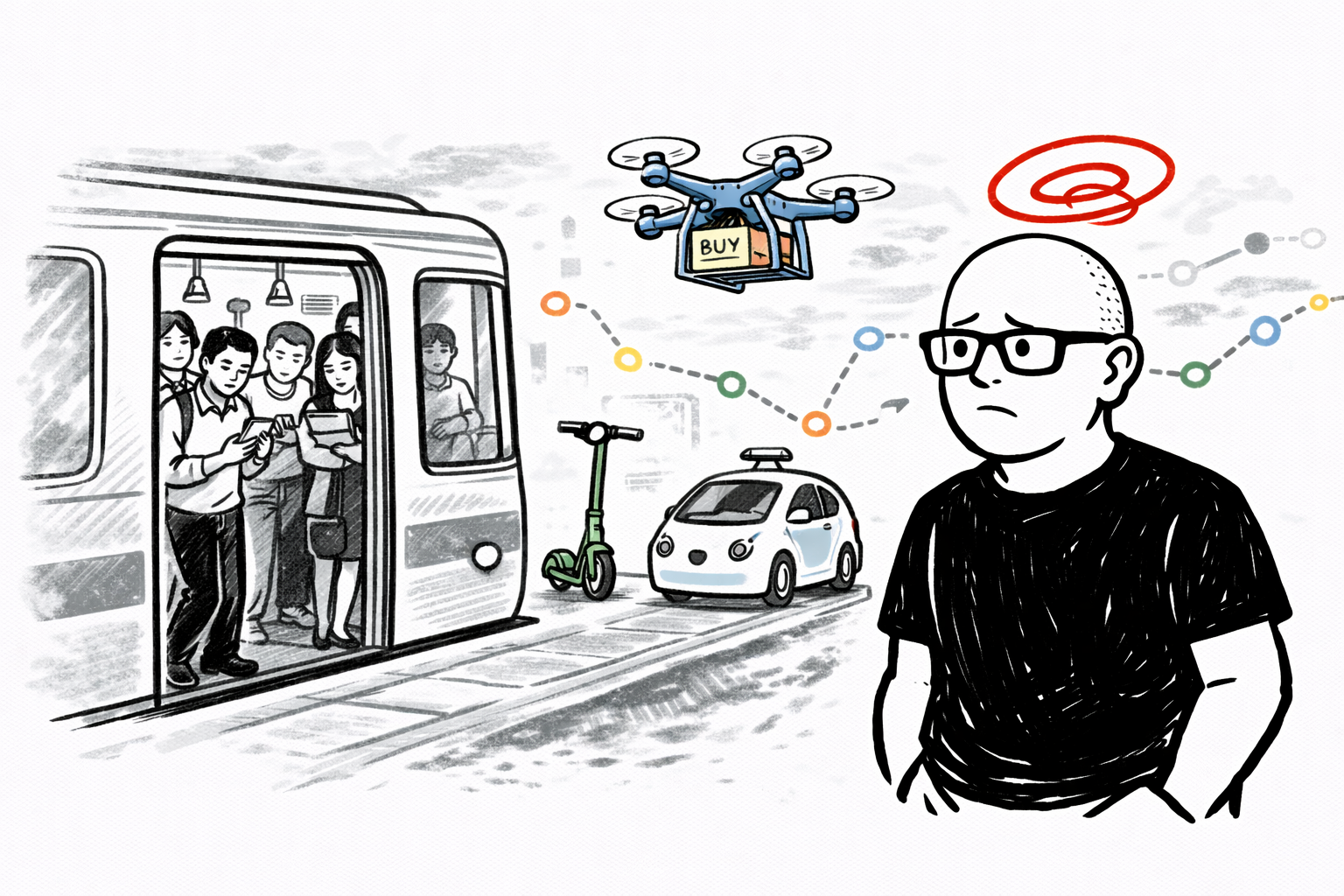
Over the last few years, I have found myself seeing organisations differently. In my last two roles, that has often meant noticing things that others either do not see or do not want to name. At times, it feels like being a canary in a coal mine: sensing the shift early, recognising that something is changing, and knowing that speaking too soon can carry its own risks.
Part of this comes from empathy, but it also comes from anthropology. Anthropology has given me more than concepts. It has given me a method of attention. It has taught me to take the everyday seriously: passing comments, silences, humour, shifts in tone, awkwardness, use of time, meetings, bodily cues, and the ordinary rituals of working life. In ethnographic terms, the
mundane is never just mundane. It is often where power, legitimacy, hierarchy, and belonging become visible.
This is perhaps where I now find myself caught. I can see things that feel obvious once noticed, yet they are not always easy to communicate in business language. I am still learning how to translate observations shaped by anthropology into terms that make sense in workplaces where people often want clarity, action, and outcomes rather than reflection on tacit knowledge, symbolic boundaries, or the social life of organisations.
Still, once you begin to see these patterns, it becomes difficult to unsee them. Even more frustrating is being powerless to change things; it is beyond the reach of any one person.
What once might have looked to me like poor communication, resistance to change, or personality conflict now appears more structured than that. There are patterns to it. Repeated tensions. Boundary lines. Small comments that do much more work than they first appear to. Anthropology has given me a language for some of this, but more importantly, a way of seeing.
Across a number of roles, especially during periods of organisational transition, I have witnessed the same kinds of dynamics emerge. They appear when businesses adopt new operating models, when leaders arrive from another sector, or when mergers force two organisational worlds into uneasy proximity. Often, the signs are subtle at first: a comment in a meeting, a dismissive joke, quiet scepticism toward a new system, or the insistence that certain things cannot be understood from a spreadsheet.
One comment that revealed a key insight: “We don’t sell chocolate bars.”
On the surface, it sounds like a throwaway line. It can be considered a sarcastic comment from a place of anger or frustration. But from an anthropological perspective, it is doing important cultural work. It is a boundary-defining statement. It marks a distinction between two different understandings of how business operates. On one side sits a relationship-driven B2B logic, grounded in tacit knowledge, negotiation, trust, and long-term reciprocal obligations. On the other hand sits a more retail logic, one that privileges standardisation, visibility, centralised control, politics, process discipline, and metrics. When I say politics, this is a very Foucauldian view of the subject, a very big topic I won’t go into here.
The point of the statement is not really about chocolate bars. It is about legitimacy. It is a claim about what kind of knowledge matters, whose experience counts, and what sort of operating logic is appropriate to the field.
This is where Pierre Bourdieu becomes useful. His concepts of field, doxa, habitus, and capital help explain what is at stake in moments like this. A field is not just an industry or organisation. It is a social space with its own rules, hierarchies, and forms of value. Doxa refers to the taken-for-granted assumptions that shape what people inside that field see as natural, sensible, and legitimate. From that perspective, “we don’t sell chocolate bars” is a defence of the field’s doxa. It is a way of saying: this is how this world works, this is what counts here, and this is what you are failing to understand.
In many traditional B2B environments, especially in wholesale, manufacturing, or distribution, tacit knowledge is central. I have seen this in both current and previous roles. Relationships are not an optional extra. They are part of the infrastructure of the business. Deals are shaped not just by price or margin, but by history, flexibility, trust, timing, local knowledge, and reputation. There is often an informal moral economy at work, one that cannot be fully captured through formal systems. In this sense, the business runs not only on products and processes, but also on accumulated social capital.
Marcel Mauss helps make sense of this. His work on exchange reminds us that transactions are rarely just transactional. They are also social. They create obligations, memory, reciprocity, and relationships that extend beyond the immediate exchange. In long-standing B2B environments, favours, flexibility, accommodation, and trust are not peripheral inefficiencies. They are often part of what keeps the business functioning. When formal systems attempt to strip those relations back to pure transaction, they risk flattening the very social fabric that made the system viable in the first place.
This is where anthropology has changed things for me. Rather than asking only why people resist, I find myself asking what they are defending, what is at stake for them, and what forms of value may be invisible to the incoming system. I also have to be careful about my own positionality. I work within the corporate field, but I also move through it as a supportive colleague. I am drawn to collaboration, wary of rigid hierarchy, and conscious that these instincts shape what I notice and how I interpret it.
When leaders from FMCG or retail backgrounds enter these spaces, they often bring genuine strengths. They may introduce clearer reporting, tighter commercial discipline, stronger category thinking, better planning horizons, and more sophisticated systems. None of that is inherently wrong. In many cases, it is necessary. The problem arises when one logic is applied to another field as though it were universally valid rather than culturally situated.
That is when friction becomes visible.
Often it appears first in language. People say things like, “That might work in retail, but not here,” or “You do not understand how this industry works.” These are not always signs of closed-mindedness. Sometimes they are defensive, certainly, but they are also claims about situated expertise. They are attempts to protect forms of knowledge that are hard to codify and easy to dismiss.
This is where Clifford Geertz’s idea of thick description becomes useful. A sentence like “we don’t sell chocolate bars” may look analytically thin if treated as simple opinion, but it is actually socially dense. It condenses a whole set of assumptions about expertise, identity, risk, legitimacy, and practical knowledge. The task is not only to hear the comment, but to interpret the social world it points to.
Once I began paying attention to these comments, I realised it reveals other forms of boundary work as well.
Humour is one of them. Sarcasm about software, dashboards, jokes about retail thinking, repeated references to the gap between the official version of work and how things actually get done. Humour allows critique to surface safely. It reinforces in-group understanding while also testing the legitimacy of the new order.
Then there are quieter behaviours: key relationships managed off-system, selective compliance with CRMs, informal workarounds, reluctance to fully document processes, and the preservation of local knowledge in conversation rather than databases. These are often framed as process failures, but they can also be read as efforts to preserve contextual intelligence from being flattened into abstraction.
Erving Goffman is useful here. His distinction between frontstage and backstage behaviour helps explain the gap between formal organisational performances and what people actually think and do. Meetings often perform alignment, clarity, and confidence. Informal spaces, by contrast, hold scepticism, fatigue, humour, and quiet refusal. What appears as agreement on the surface may not be agreement at all, but a managed performance designed to navigate power.
I have seen these dynamics become especially intense after mergers.
A merger is often described in structural terms: new reporting lines, new systems, new leadership, new efficiencies. But from the inside, it is also the collision of two organisational worlds. Each carries its own history, assumptions, rhythms, status hierarchies, and ways of creating value. What follows is rarely a smooth integration. More often, it is a liminal period, a prolonged in-between state in which the old order has been disrupted but the new order has not yet become fully stable.
Victor Turner’s notion of liminality helps make sense of this. In liminal states, people occupy an unstable threshold. Normal structures loosen, identities become unsettled, and behaviour can intensify in revealing ways. Post-merger environments often feel exactly like this. People begin to mark boundaries more visibly. There are references to how things used to be done, distinctions between legacy and incoming teams, and growing sensitivity around who has the right to decide, interpret, or lead.
Parallel systems often emerge. The official process sits on top, while informal practices continue underneath. Meetings become highly performative, signalling alignment and optimism, while backstage spaces hold fatigue, scepticism, or quiet refusal. Anthropology has helped me recognise that these are not random signs of dysfunction. They are signs that multiple systems of meaning are colliding, overlapping, and struggling for legitimacy.
This is one of the most useful things anthropology has offered me. Organisations are not only rational structures. They are social worlds held together by meanings, habits, hierarchies, rituals, and shared understandings that often remain invisible until they are disrupted. When change enters, it does not simply alter the process. It unsettles identity, legitimacy, and the taken-for-granted rules of the game.
That is why leadership in these environments cannot rely solely on authority. It has to operate with empathy.
I do not mean empathy in a sentimental sense. I mean it as a form of perception. The ability to read a situation not only for its formal content but also for the social and cultural stakes underlying it. The ability to recognise that what appears as resistance may actually be an effort to protect relational capital. That a dismissive comment may be less about negativity than about defending a way of knowing that feels under threat. That a delay in adoption may reflect not laziness, but a different rhythm of risk, trust, and responsibility.
Without that kind of empathy, leadership tends to default to imposition. Systems are rolled out. Compliance is measured. Dissent is pathologised. Values are weaponised. Legacy knowledge is treated as backward rather than contextual. In the short term, this can create the appearance of movement. In the longer term, it often produces erosion. Trust weakens. Experienced people disengage. Relationships fray. The organisation may look more aligned on paper while becoming more brittle in practice.
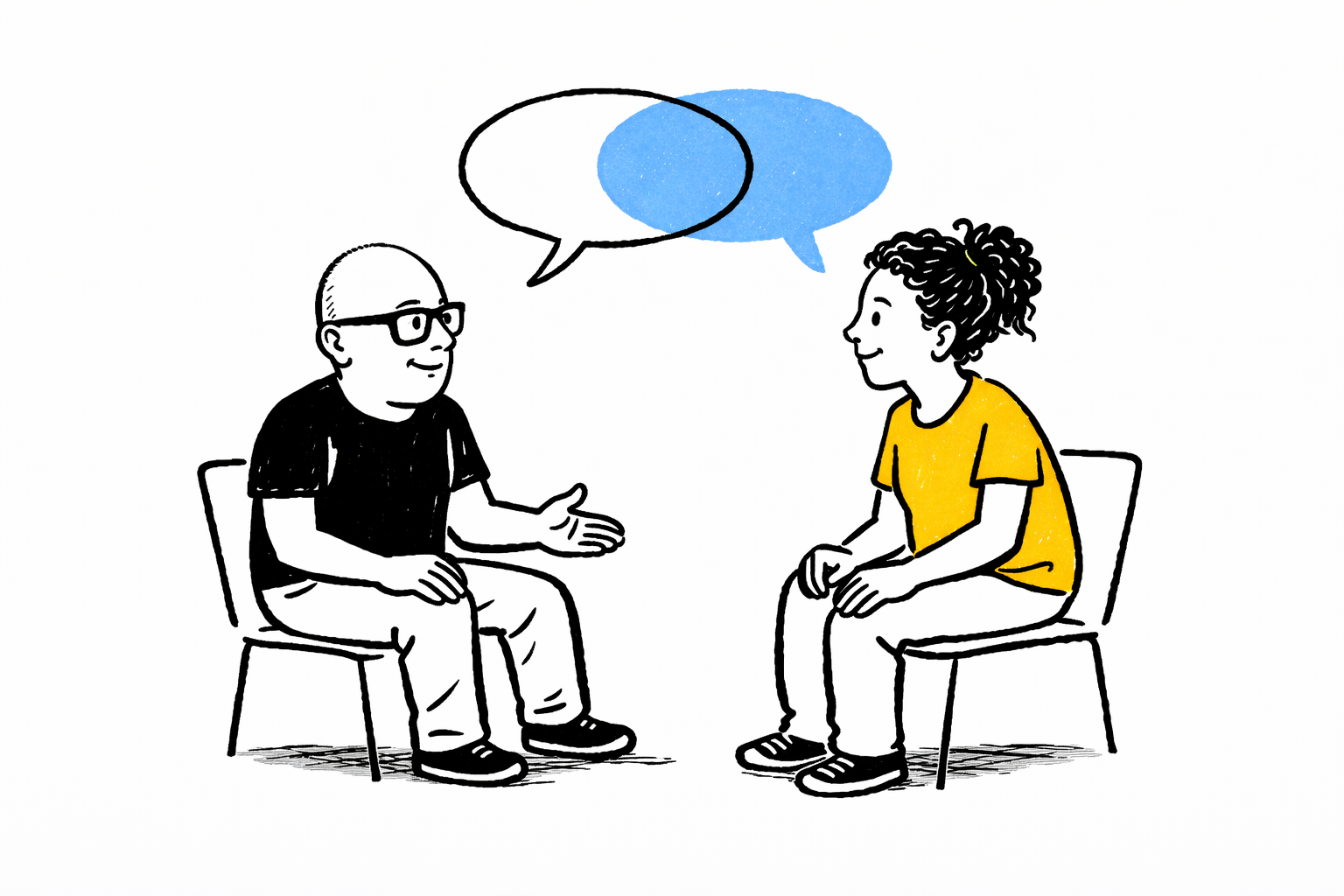
What I keep returning to is the idea that leadership in these spaces is less about control and more about translation. My own sense of leadership has shifted because I have never seen control as the central organising principle. Collaboration matters more. Interpretation matters more. The ability to hold multiple logics in view matters more.
That translation is not easy. It requires leaders to understand that different parts of the organisation may operate with different assumptions about value, evidence, time, and legitimacy. It requires a willingness to hold multiple logics in view at once. It also requires recognising that not everything valuable can be immediately standardised without loss. Some practices need to be interpreted before they can be integrated. Some forms of tacit knowledge need to be respected before they can be made visible. Some relationships need to be preserved even while systems evolve around them.
From the lower end of middle management, however, you are often only playing with half the cards. Assumptions creep in. Closed-door meetings take place elsewhere. What returns is often a clipped or pre-digested version of thinking, redistributed as if it were clarity. That adds to the feeling of distance between those who decide and those expected to absorb the decisions. When you do not have the full deck or even know what game is being played, work can begin to feel like operating in a vacuum. That edge of uncertainty creates a subtle sense of othering, and when that happens, people often seek solidarity with those closest at hand.
Again, anthropology has helped me see this differently. It encourages reflexivity, which is to say, an awareness that observation is never neutral and that one’s own position within a field matter. It also encourages attentiveness to contradiction. The same organisation that speaks the language of collaboration may operate through exclusion. The same leadership team that advocates change may fail to interpret the world it is trying to change. The same systems that promise clarity may generate new forms of opacity.
This is where my own learning sits now. Anthropology has offered me a way to make sense of what I have observed across organisations, especially in moments of tension and transition. It has given me concepts for things I sensed long before I could name them. That has been valuable not only for understanding organisational life but also for thinking differently about strategy. At the same time, it has complicated my relationship with business language. Terms like resistance, alignment, capability, and change management often feel too thin for what is happening. They describe the surface, but not the social world beneath it.
So, for me, part of the work is learning how to move between these languages without losing too much in translation.
I do not think anthropology offers neat solutions to organisational problems. What it offers instead is an ethnographic disposition: close observation, attentiveness to context, reflexivity about positionality, and a willingness to treat everyday organisational life as culturally meaningful rather than merely operational. It encourages different questions. Not just what is failing, but what is being defended. Not just what system should replace another, but what forms of value are likely to disappear if that happens too quickly. Not just how to lead change, but how to interpret the field you are entering before assuming you understand it.
That, to me, is one of the gifts anthropology offers business. It does not remove tension. It makes tension more legible. It helps explain why the same patterns reappear across different roles, industries, and structures. It reminds us that organisations are not only managed. They are inhabited.
And once you begin to see that, leadership looks different too.
It becomes less about driving change into a business and more about reading the cultural conditions in which change is taking place. Less about forcing convergence and more about understanding what must be translated, what must be protected, and what may need to emerge more slowly.
I am still learning how to articulate all of this. Still learning how to speak from an anthropological lens in spaces that do not always have a ready vocabulary for it. But perhaps that is part of the work: refining the translation, paying attention, and noticing the small comments, the jokes, the workarounds, and the defended boundaries that reveal far more than formal strategy ever can.
Because sometimes a sentence like “we don’t sell chocolate bars” is not just a comment.
It is an entire organisational world speaking.